
Limited pieces · Made in small runs
We wanted to wear tradition differently.
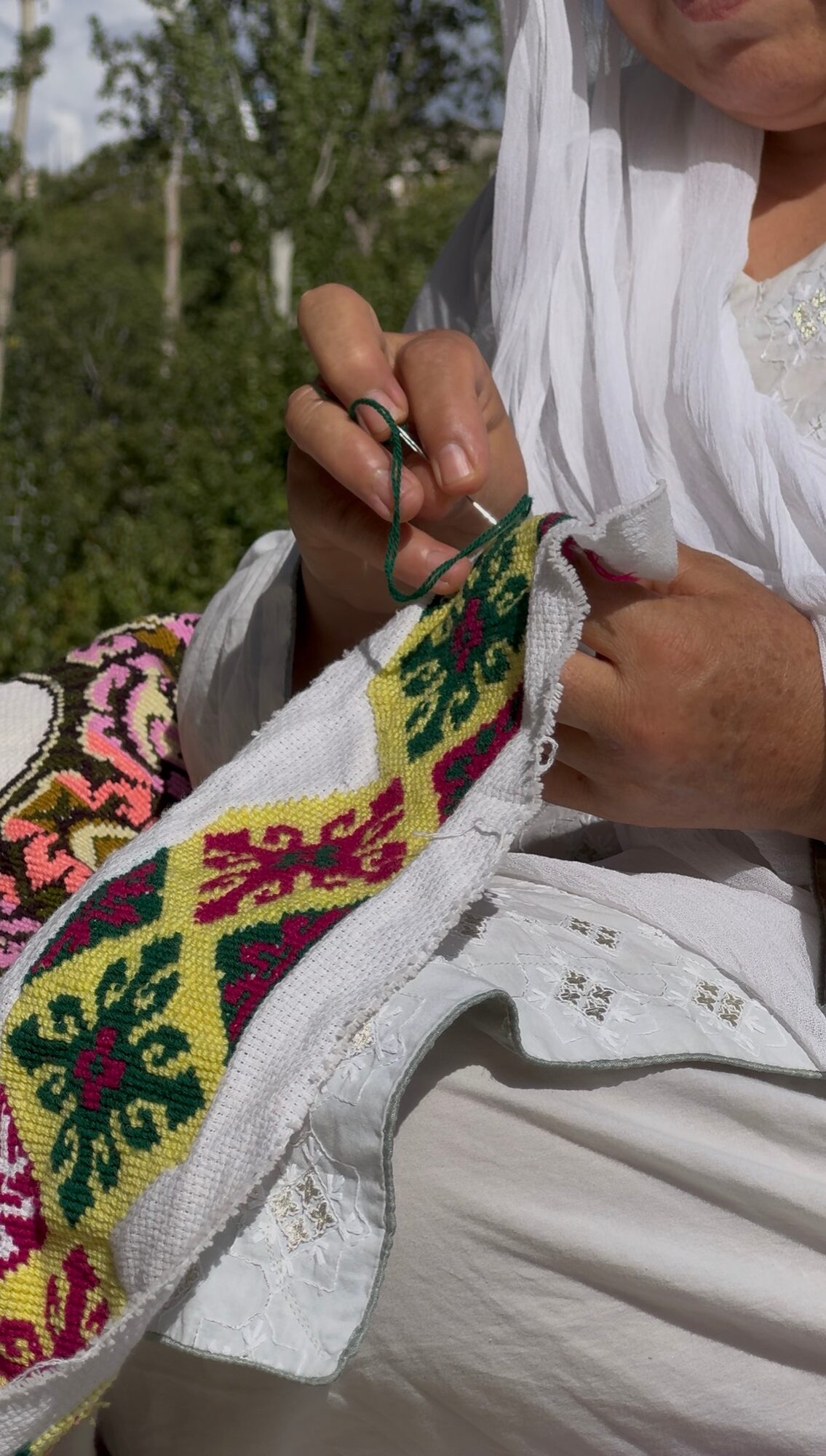
In Gilgit, cross-stitch is everywhere. It's on wedding dresses, dowry pieces, wall hangings, and the cushions in people's homes.
But it waits for an occasion. You wear a shuka or a traditional cap when there's a reason to.
What happens when those hands enter streetwear?
The hands
RAKA works with women artisans in Jutial, Gilgit, and Karimabad, Hunza. The makers set the price of their work.
The first motifs were developed with Gul Nama, drawn from Hunza's cherry blossoms in traditional colour combinations. The first one was called Phunar. It means flower.
They are collaborators with authorship over what they make.
The seams
Tees are cut and stitched in Lahore, because that's where reliable garment manufacturing is. The embroidery, the part that carries the meaning, comes from the North.
We say this plainly whenever asked. Hiding it might make the story sound better. It would make the brand worse.
The contrast
Old and new. Handmade and streetwear. Mountain and city.
RAKA places traditional visual language inside contemporary clothing. The tension between the two is the point.
The trip
This craft rarely enters mainstream Pakistani streetwear. RAKA gives it things that travel: tees, caps, pouches, and now cushions for the home. They're meant for everyday use, not saved for a wedding.
The name travels with it. RAKA comes from Rakaposhi, the mountain over the Hunza valley.
How it's made
The motif
Embroidered by hand in Gilgit-Baltistan. No two are identical.
The tee
Drop-shoulder and oversized. Cut and stitched in Lahore.
The sleeve mark
راکا on the sleeve, tone-on-tone. You have to be close to read it.
- Fabric
- Fabric weight varies by release. Each piece lists its own.
What we believe
We don't believe tradition needs protecting from change. It survives because people keep finding new reasons to make it.
RAKA takes handwork from Gilgit-Baltistan and puts it somewhere unexpected. On oversized tees. In cities. At concerts. On streets.
Different hands leave different marks. We keep them.
This isn't traditional clothing. It's tradition, worn differently.
Threads from the North.